Tunic Shirt
Historical Overview
Disclaimer: This tunic shirt draws from a long and meaningful heritage. The original garment is no longer produced in its historical form. The present piece should be understood as a modern interpretation—it preserves the spirit and aesthetic influence of the original while adapting it to contemporary materials and production standards.
1. Ancient World (c. 3000 BCE–500 CE)
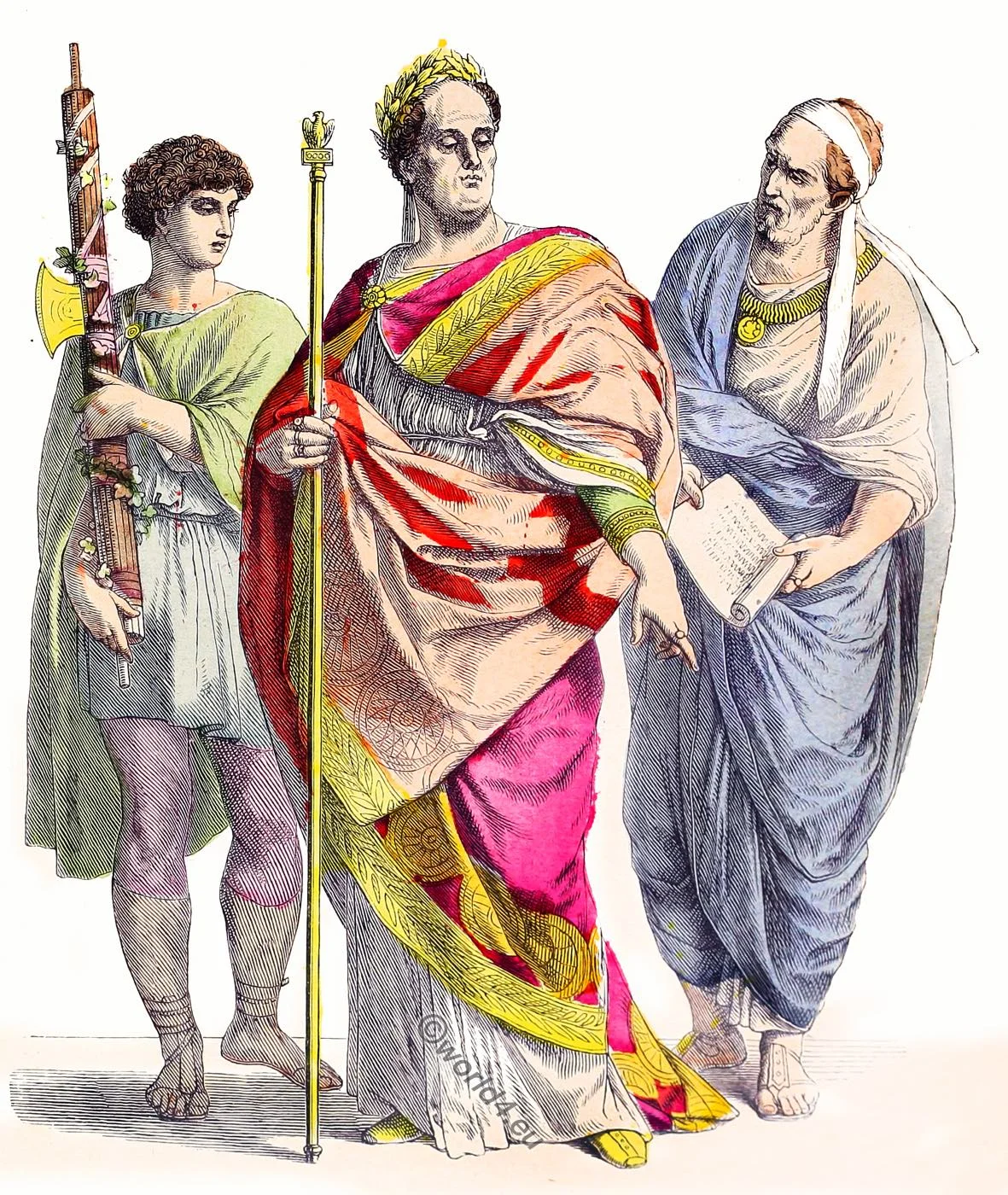
The tunic emerged as a basic, universal garment in early civilizations such as Egypt, Greece, and Rome. Made from simple fabric rectangles, it emphasized ease, mobility, and efficient construction. Variations in length and decoration signaled status rather than changes in form.
2. Early & High Middle Ages (c. 500–1300)
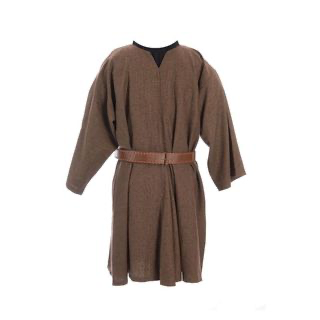
The tunic remained everyday dress in Europe, gaining sleeves and added panels for warmth and movement. Social rank influenced fabric and length. Across the Islamic world and Asia, loose tunic forms developed in response to climate and religious norms.
3. Late Middle Ages & Early Modern Period (c. 1300–1700)
Western fashion shifted toward fitted, tailored garments, reducing the tunic’s prominence. It persisted in clerical, military, and rural use. In non-Western regions, tunic garments like the kurta and thobe remained central.
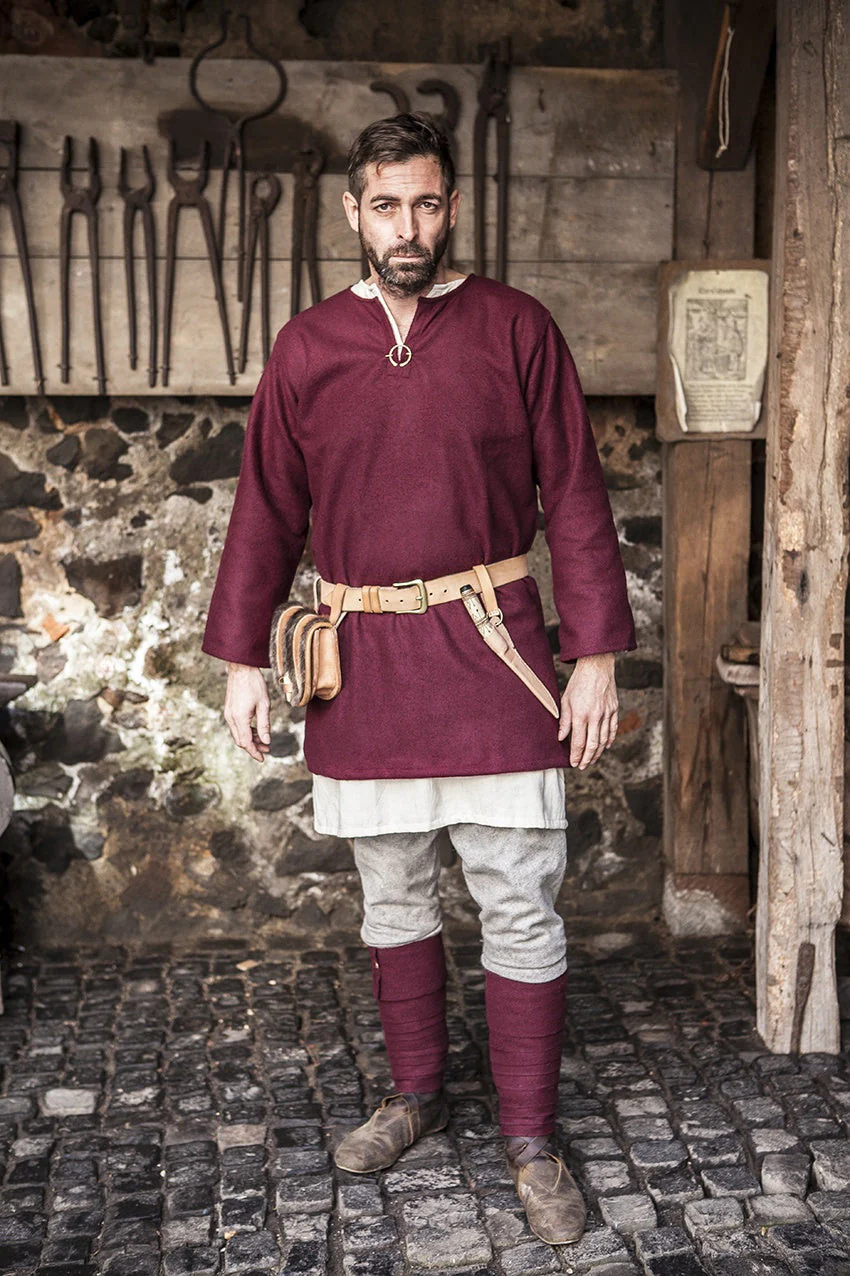
4. Industrial & Colonial Era (c. 1700–1900)
Industrialization favored structured clothing in the West, but tunics survived in workwear and dress-reform movements. Colonial contact increased Western awareness of global tunic traditions and their practicality.
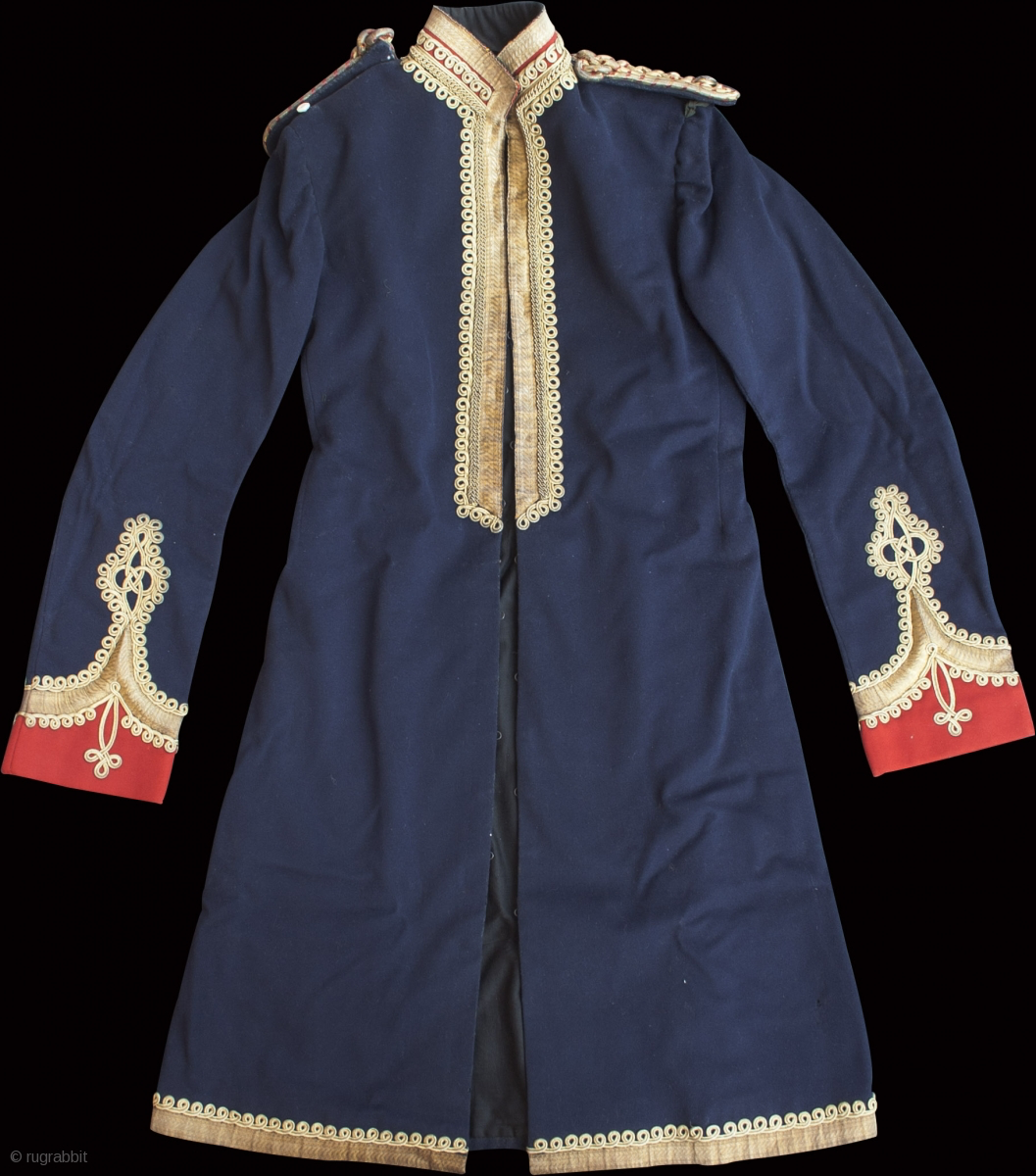
5. Modern & Contemporary Period (20th century–present)
The tunic shirt returned as a fashion staple, valued for its relaxed fit and versatility. Defined by extended length, minimal shaping, and simple necklines, it remains a cross-cultural symbol of comfort and timeless design.
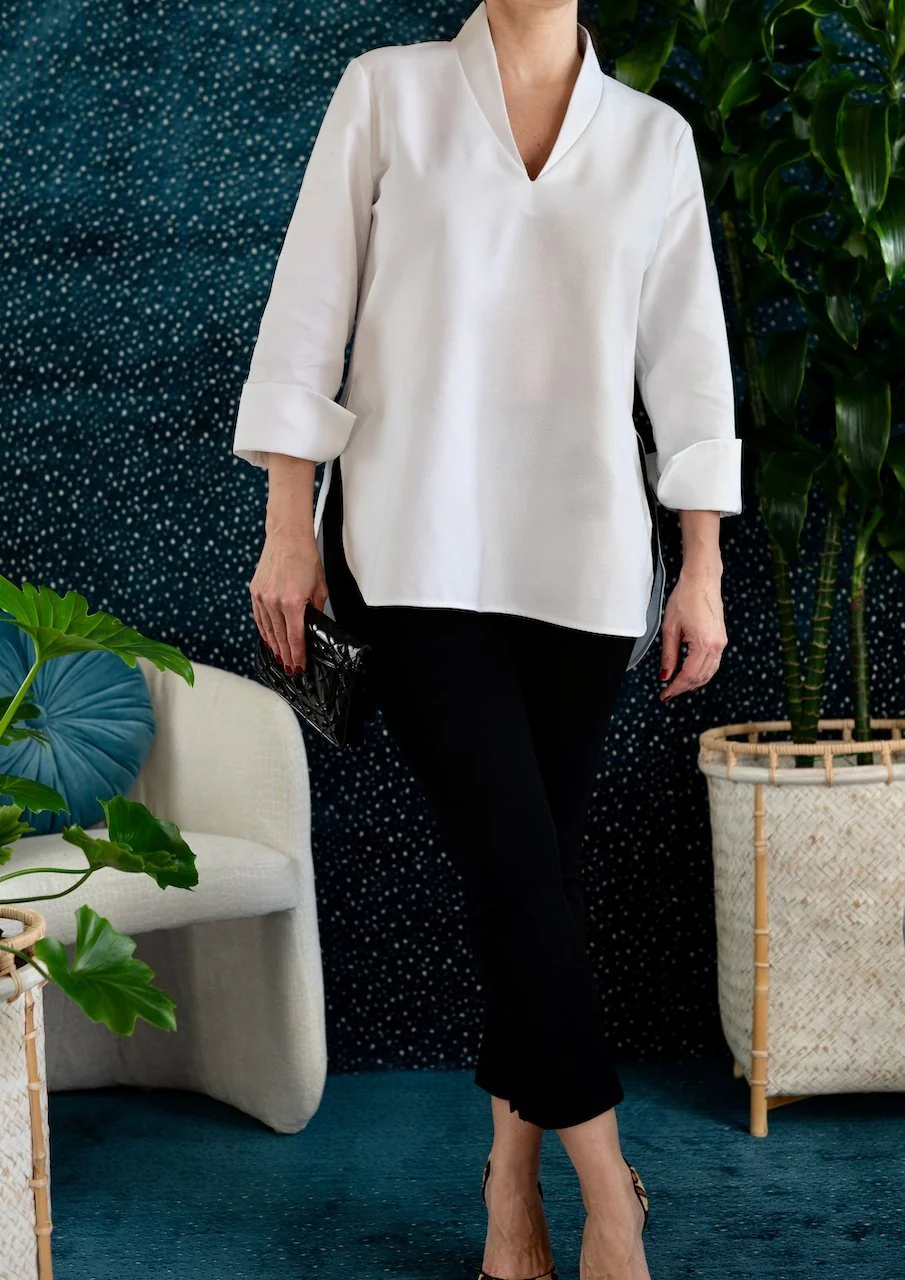
The Tunic Shirt on Recent Runways
Silhouette & Proportion
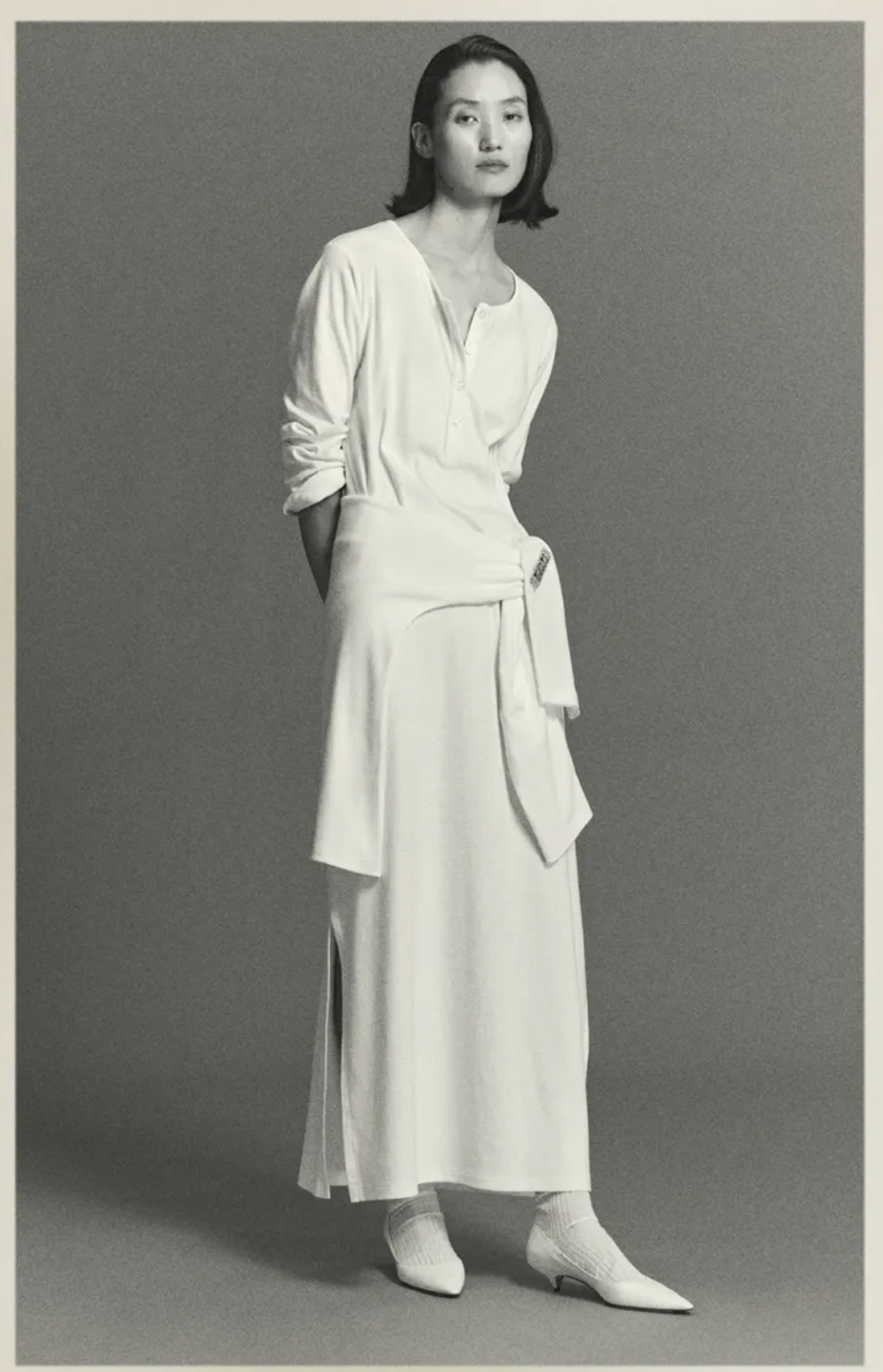
Designers are emphasizing elongated, relaxed shapes that fall between a shirt and a short dress. The loose cut resists body-conscious trends, aligning the tunic with current preferences for ease, fluidity, and inclusivity.
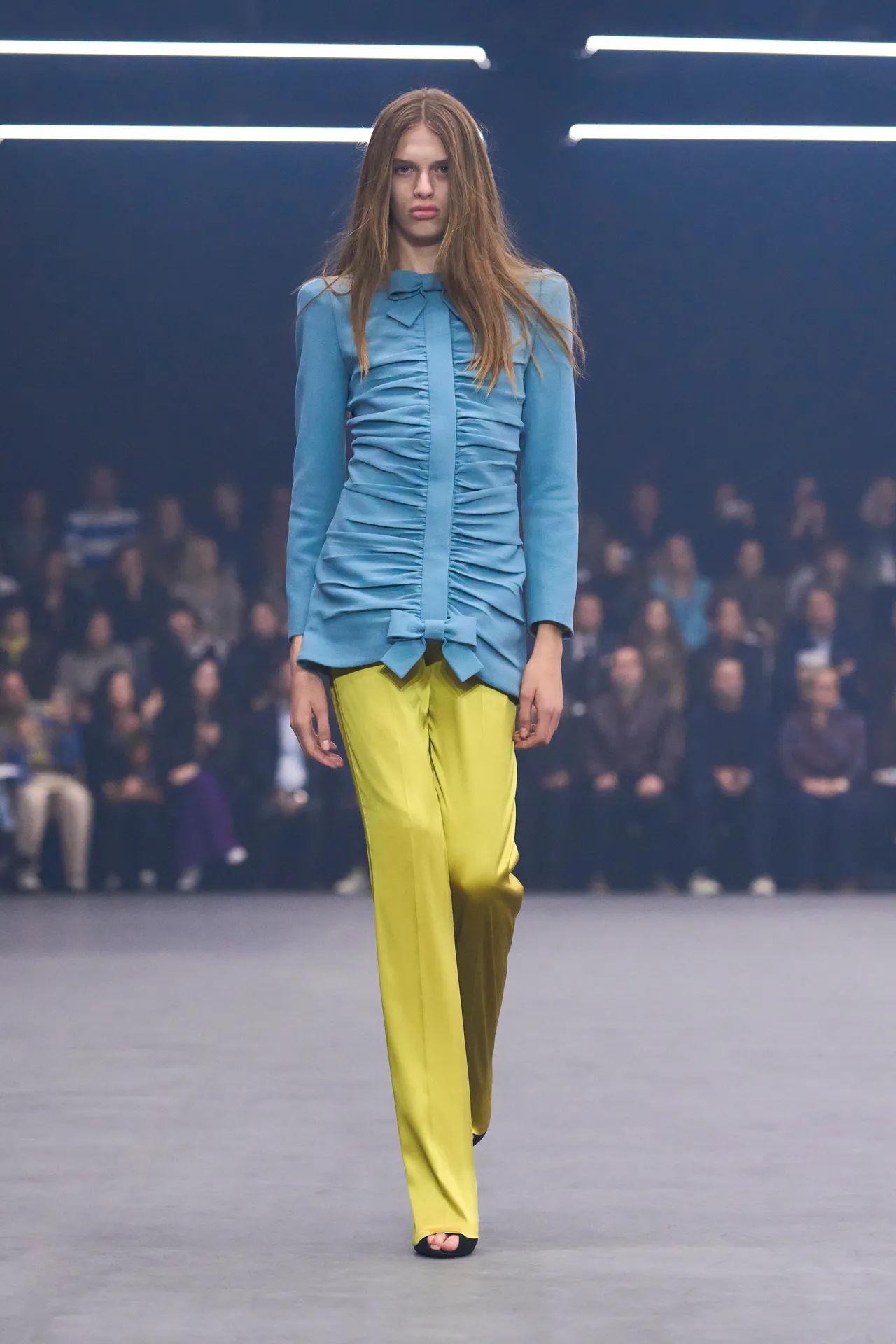
Design Updates
Rather than heavy decoration, modern tunics rely on refined construction details—asymmetry, extended plackets, side slits, and exaggerated sleeves. Band collars and clean necklines subtly reference historical and global tunic traditions.
Materials & Texture
Lightweight cottons, silks, fine wools, and technical blends dominate, chosen for drape and movement. Fabric quality elevates the simple form while reinforcing longevity and wearability.
Styling on the Runway
Tunics are styled as versatile layering pieces, worn over wide-leg trousers or fluid skirts, or alone as minimalist dresses. This flexibility reflects fashion’s shift toward adaptable, multi-use garments.
Overall Direction
Across recent collections, the tunic shirt is reinterpreted as a modern essential—balancing timeless simplicity with contemporary proportions, elevated materials, and styling that prioritizes comfort and relevance.
Avant-Garde Interpretations
Experimental Silhouettes & Proportions
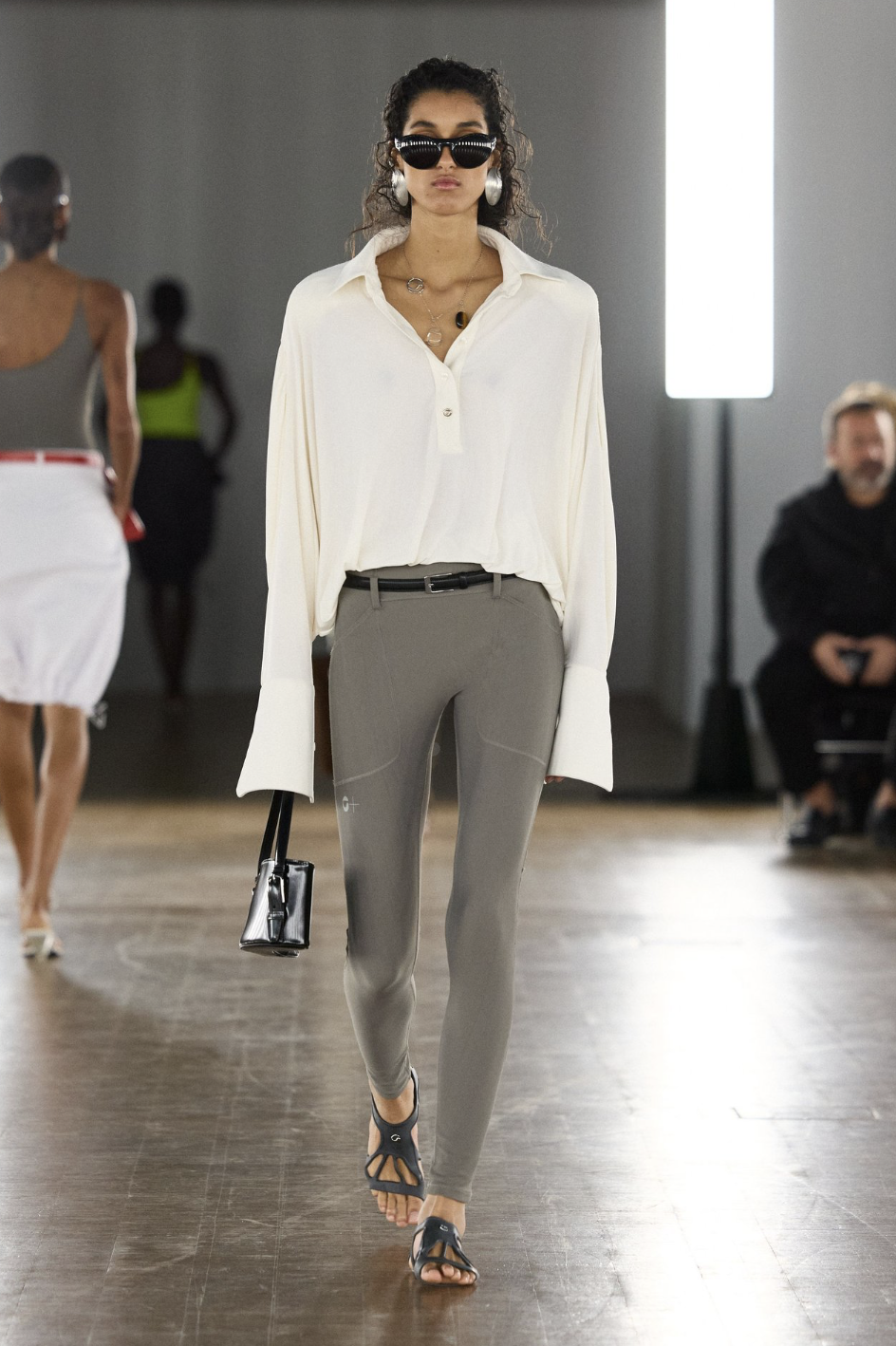
Avant-garde designers are redefining the tunic shirt with radical proportions and deconstruction, pushing the garment toward conceptual art rather than conventional wear. Look for oversized, asymmetrical shapes and sculptural volume that distort the classic tunic outline.
Example: Maison Margiela Spring/Summer 2026 Look 28 — experimental, oversized shirt-like pieces that recast simple forms into exaggerated, almost abstract silhouettes.
Material Innovation & Texture Play
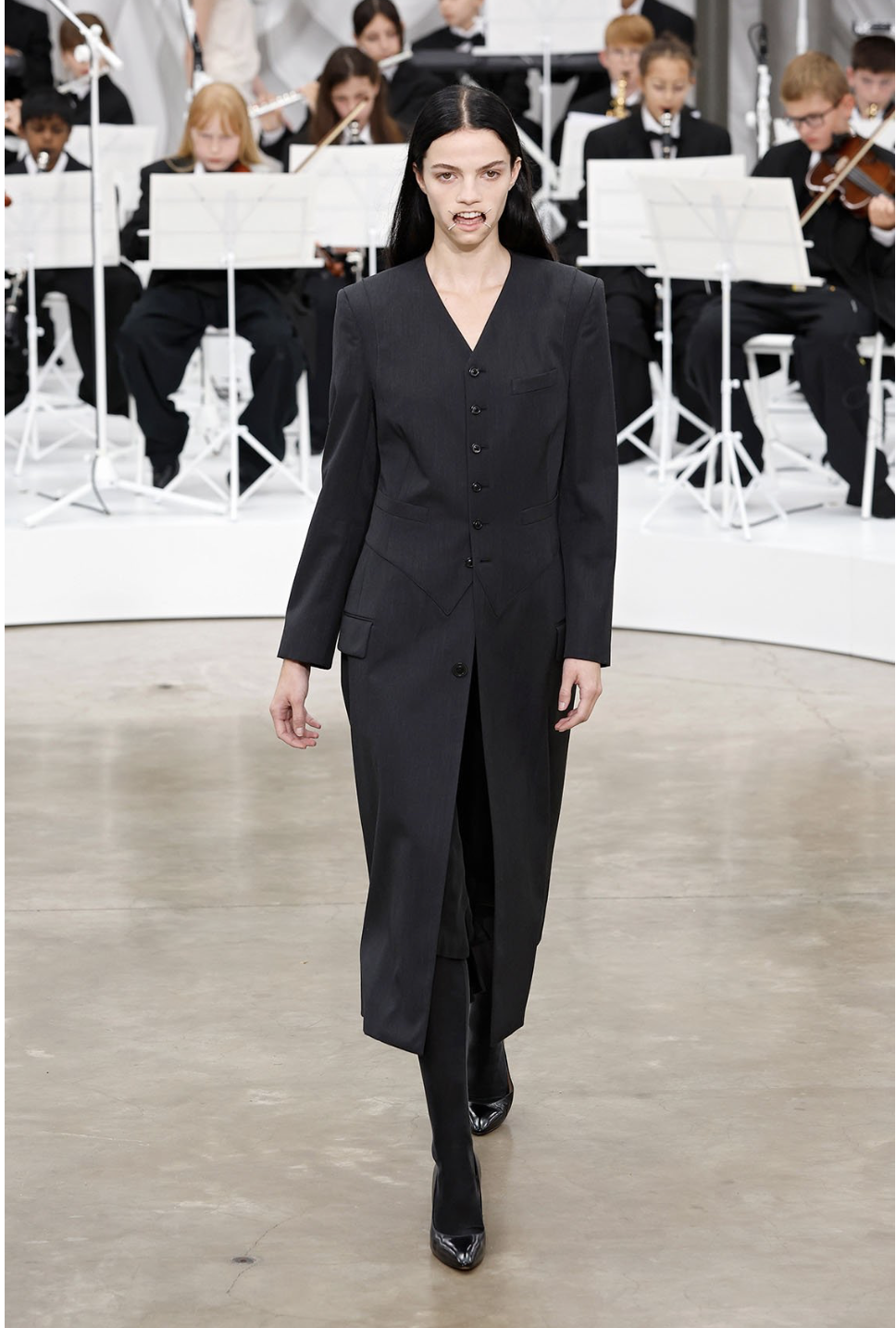
Materials on avant-garde runways often subvert expectations: think unexpected stiffness, layering, and contrasts (e.g., sheer with structured panels) to challenge the garment’s identity. These choices highlight fabric as a conceptual medium.
Deconstruction & Reconstruction
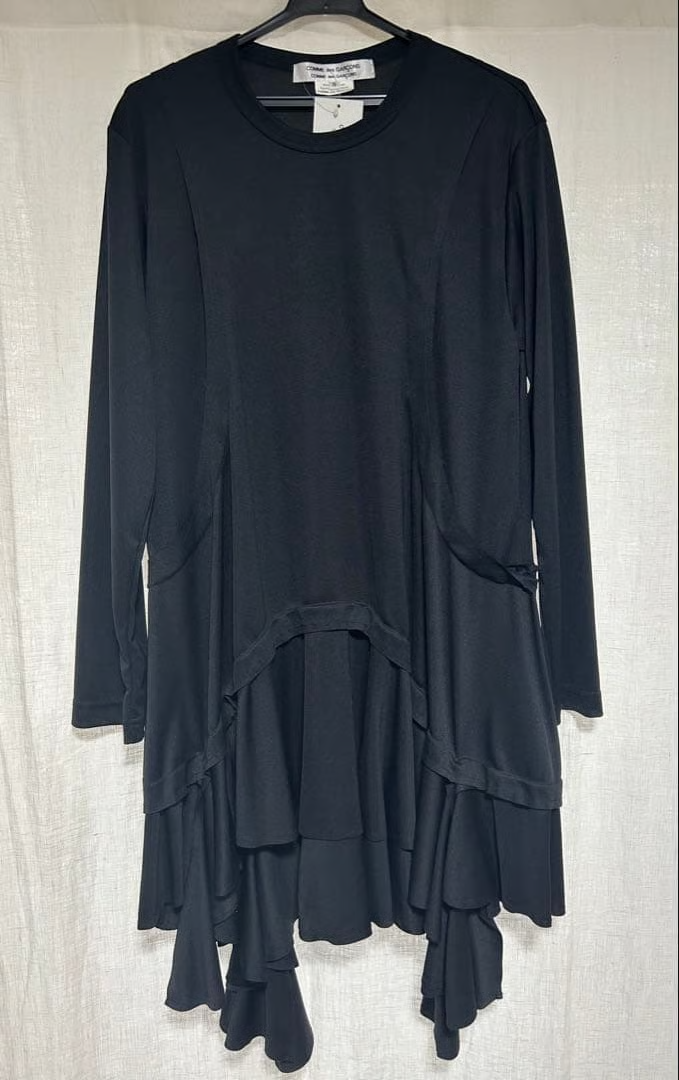
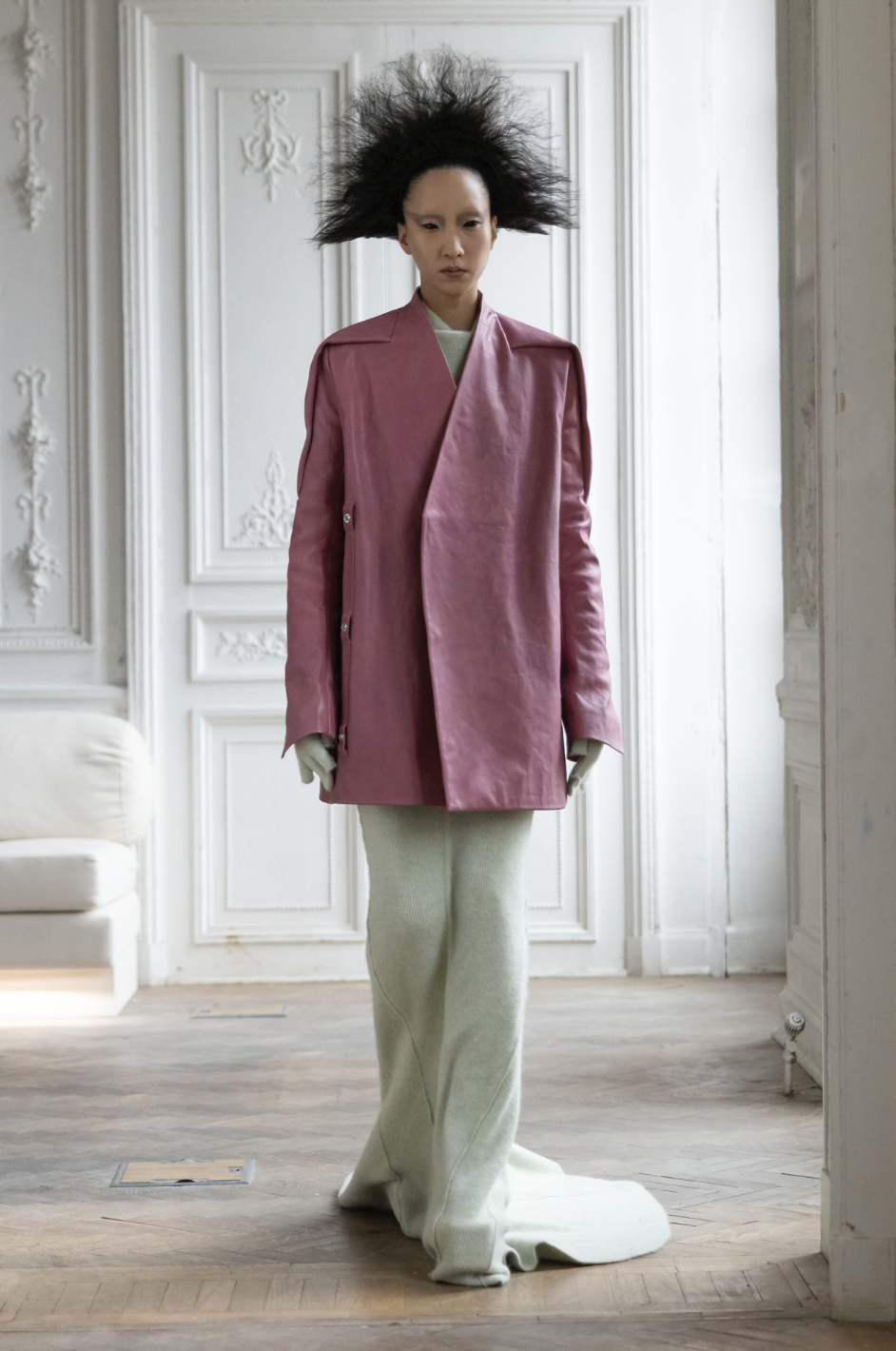
Avant-garde reinterpretations frequently deconstruct the classic tunic, unpicking seams and reassembling elements to create asymmetry or hybrid garments that read like wearable art.
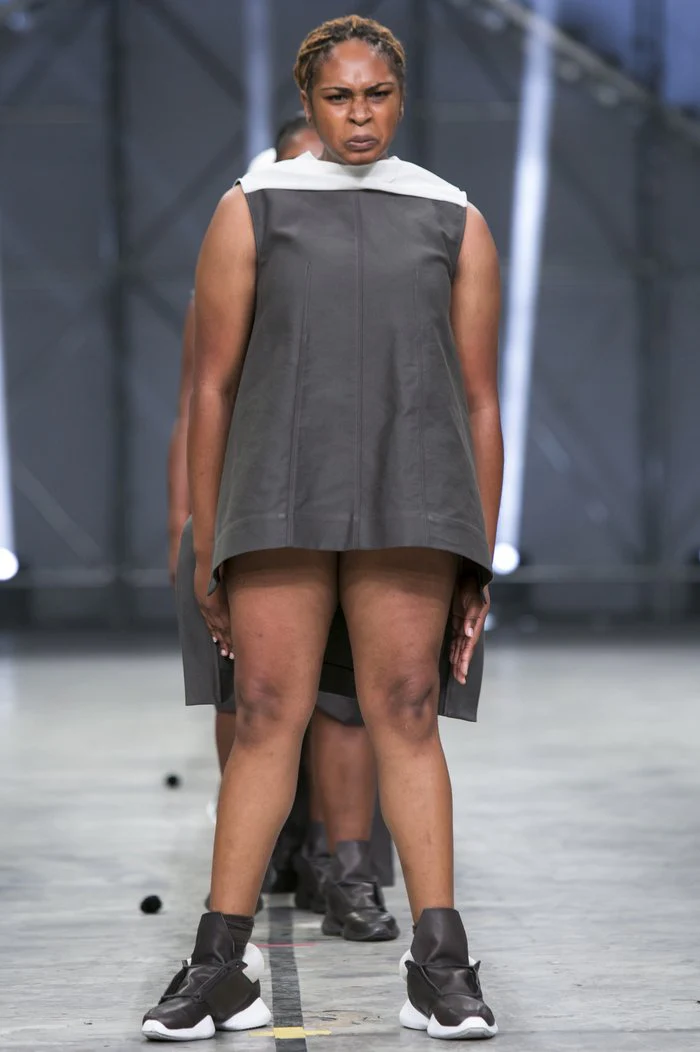
Rick Owens Fall/Winter 2024/25 Look 29 — pieces with unusual proportions and sculptural draping that abstract shirt forms into architectural statements.
Narrative & Symbolism
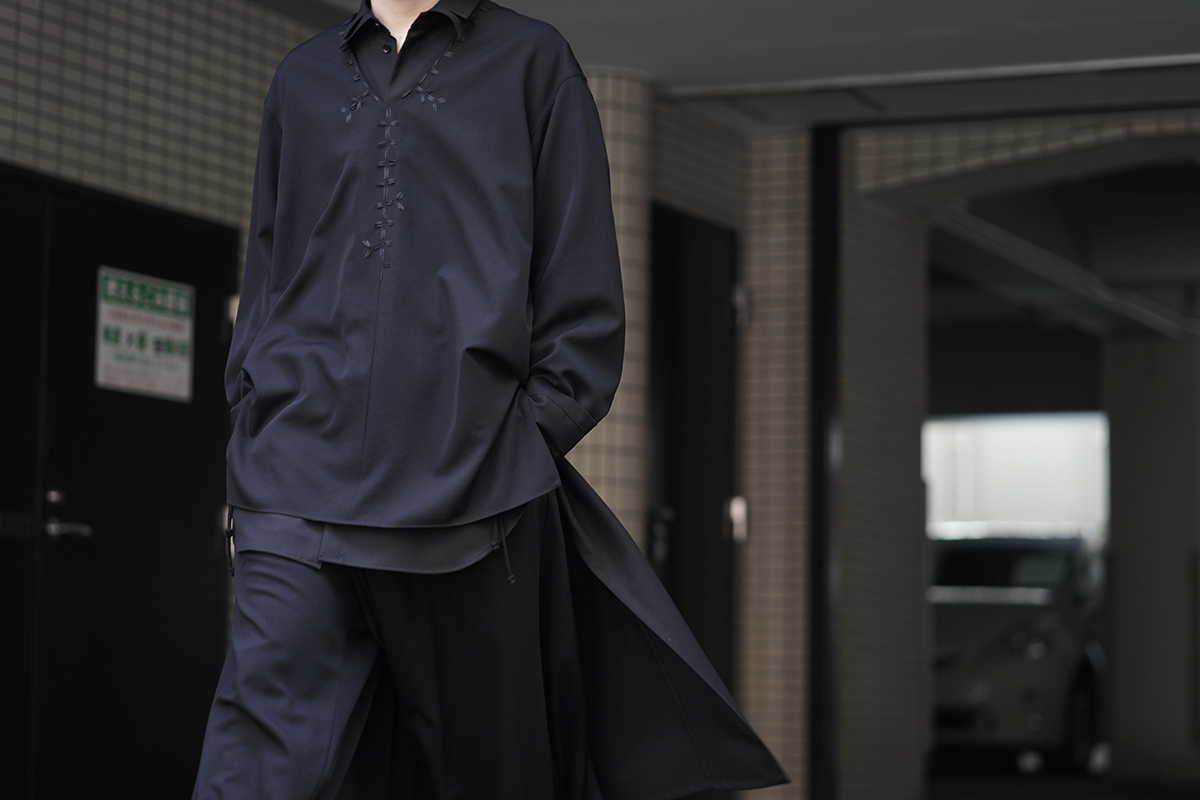
In avant-garde practice, the tunic shirt often serves as a canvas for storytelling—symbolizing everything from resistance to tradition to explorations of identity and form rather than pure functionality.
Brand Comparison: High-End vs. Mass-Market
High-End Brand: Rick Owens
Rick Owens applies an avant-garde, architectural lens to the tunic shirt, transforming it from a simple Western classic into a sculptural wardrobe piece. The brand often blurs the line between garment and wearable art.
- Style & Silhouette: Dramatic, elongated tunic with an architectural feel and unconventional lines.
- Line & Cut: Asymmetrical cut with layered panels and sharp edge detailing, breaking traditional shirt symmetry.
- Volumes & Proportions: Oversized torso and extended hem contrast with narrower shoulder shaping for a bold silhouette.
- Key Design Details: Pleated layered collar, side cut-outs, and sculptural silhouette.
- Fabrics: Rigid, high-quality cotton with structured hand, reinforcing the form’s sculptural intent.
Mass-Market Brand: Kaffe
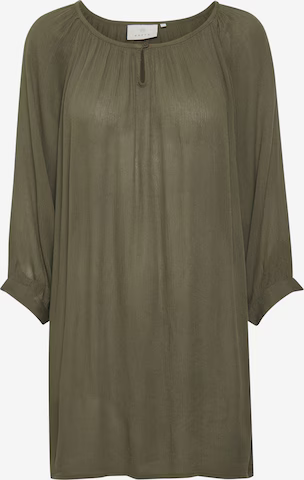
Mass-market brands like Kaffe interpret the tunic shirt through the lens of wearability, affordability, and everyday versatility.
- Style & Silhouette: Classic tunic with a relaxed, easy figure that works with jeans or leggings.
- Line & Cut: Straight cut tunic line with minimal tailoring, focusing on simplicity.
- Volumes & Proportions: Moderate volume without dramatic shaping; slightly elongated hem for a laid-back look.
- Key Design Details: Clean neckline, simple sleeve detailing, and a straightforward finish.
- Fabrics: Comfortable knit or woven cotton blend aimed at everyday comfort and easy care.
| Aspect | Rick Owens (High-End) | Kaffe (Mass-Market) |
|---|---|---|
| Design | Avant-garde expression with exaggerated forms and architectural shaping | Classic relaxed tunic shape, optimized for everyday wear |
| Cultural Influence | Fashion theory and runway prominence, conceptual influences | Mainstream preferences for comfort, functionality, flexibility |
| Consumer | Niche luxury buyers who prioritize design innovation and artistic identity | Diverse audience seeking practical, wearable fashion at accessible price points |
| Fabric | Structured premium cotton to highlight form | Soft, easy fabrics that travel well and wash easily |